About Me

Hi, I’m Kaycee. I know what it feels like to struggle with money and not understand why certain habits are so hard to break. My own financial challenges pushed me to learn, grow, and eventually rebuild my relationship with money, and that journey inspired me to help others do the same.

Today, I support people who feel overwhelmed by their finances, whether they’re single parents, living paycheck to paycheck, or simply trying to break old spending patterns. My approach is personal, supportive, and family‑focused, because real change happens when you feel understood, not judged.

If you’re ready to take control of your finances and build healthier habits, I’m here to guide you every step of the way.
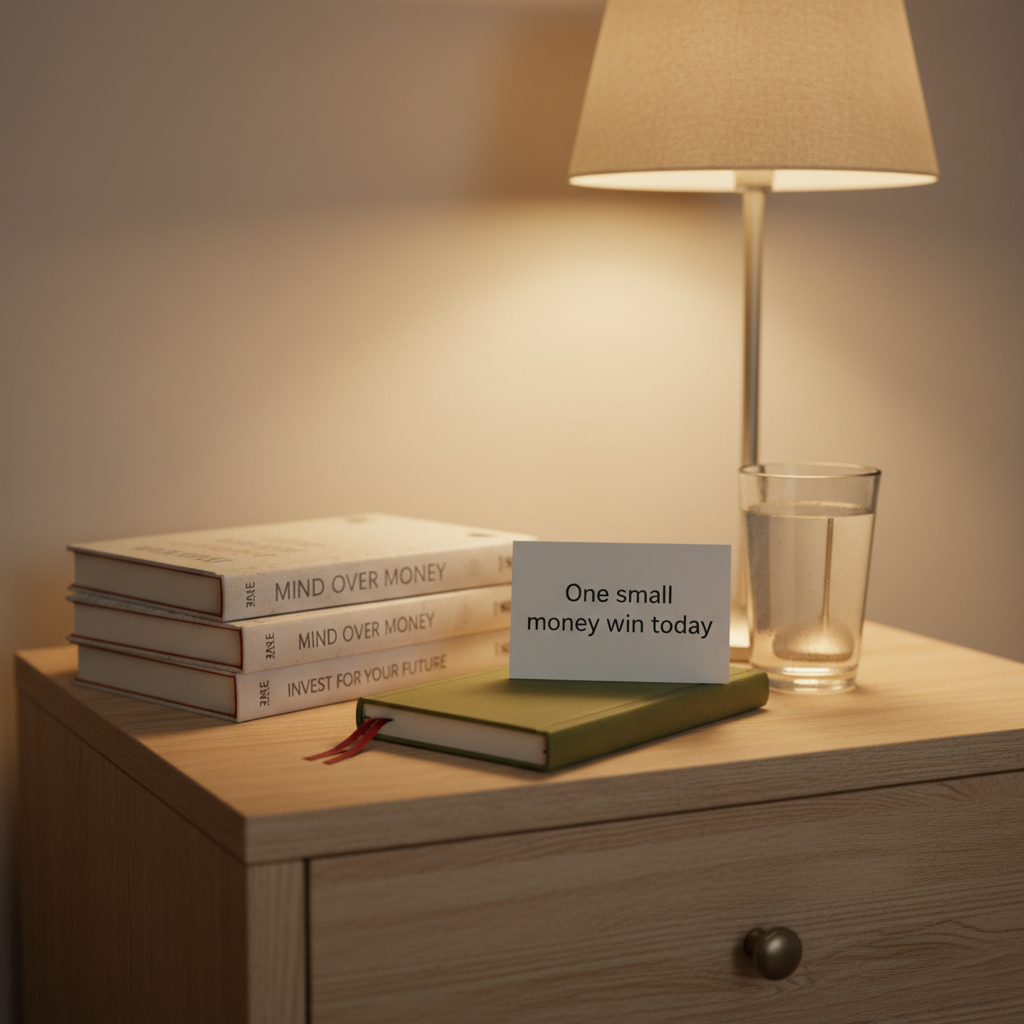
A serene bedside scene featuring a simple wooden nightstand against a soft neutral wall, holding a small stack of well-worn financial coaching books, a slim journal with a ribbon bookmark, and a glass of water catching faint reflections. On top of the journal, a minimalist card reads "One small money win today" in clean typography. A warm bedside lamp with a fabric shade casts gentle, golden light, creating a cozy pool of illumination and subtle vignetting around the edges of the frame. Photographic realism from a slightly low, angled perspective. The mood is comforting and reflective, suggesting that financial behavior change is integrated into everyday life, approached gently at the pace of the individual.
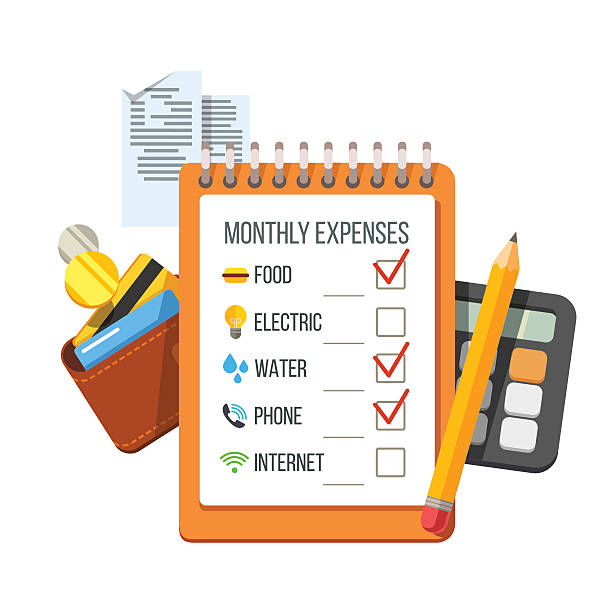
Monthly expenses planning checklist with receipts, wallet and calculator. Flat style vector icon illustration.

Behavioral Budgeting, Made Human

I blend behavioral science, practical tools, and compassionate coaching to help you understand why money feels hard, not just what to do with it.

Behavioral Budgeting Framework

Together, we map your habits, design a flexible spending plan, and build simple, repeatable routines so progress feels sustainable, not restrictive.
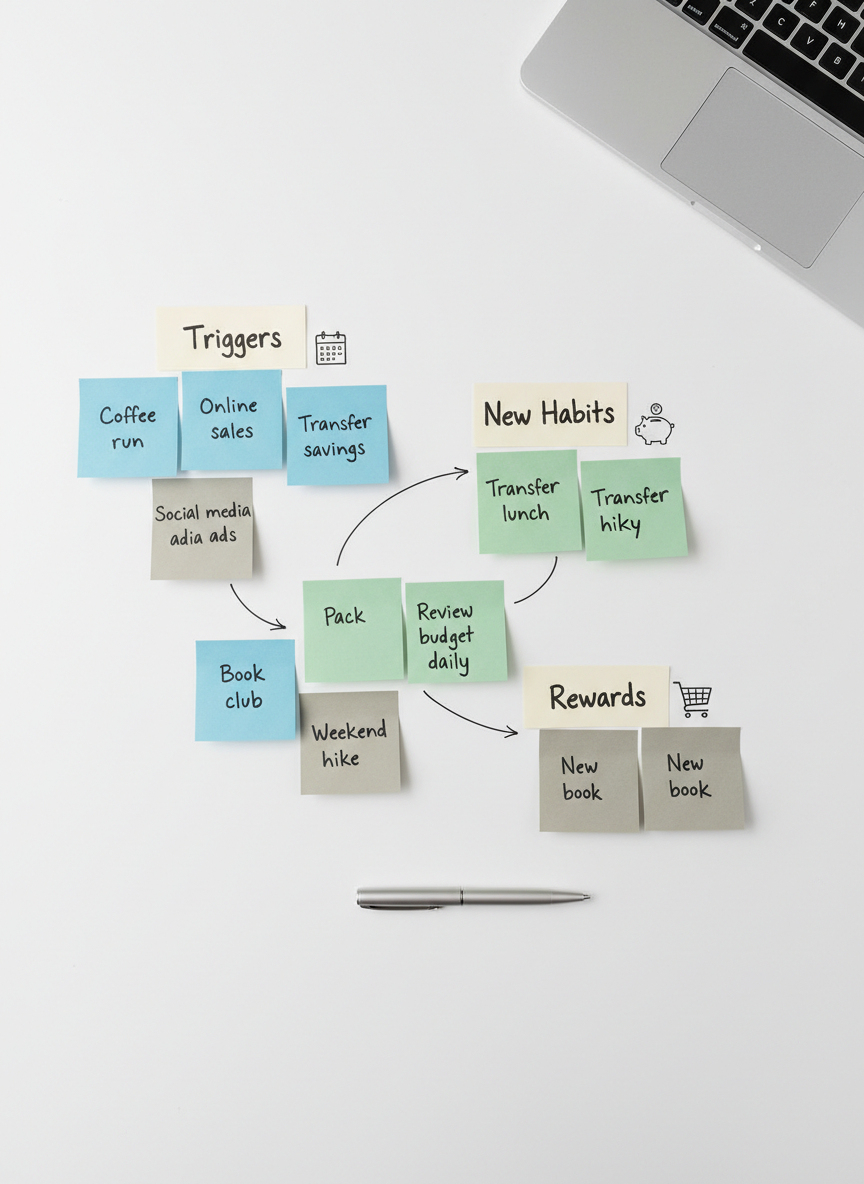
An overhead photographic view of a large, smooth white workspace where colorful sticky notes form a visual behavior-change map for finances. Notes in soft blues, greens, and taupes are grouped under headings like "Triggers", "New Habits", and "Rewards", written neatly on slightly larger cards. Small financial symbols—simple icons of a calendar, a piggy bank, and a shopping cart—are sketched beside the clusters. A slim, silver pen rests at the edge of the arrangement, and a closed laptop sits unobtrusively in the top corner. Soft, diffused studio lighting minimizes harsh shadows, creating a calm, analytic mood. The composition uses asymmetrical balance with sharp focus, conveying structured, non-judgmental exploration of money behaviors.